 EN
EN

Choosing between a WiFi LED controller and a Zigbee LED controller depends on your smart lighting goals, project size, network requirements, and desired level of automation. WiFi controllers are ideal for direct smartphone control and simple smart home applications, while Zigbee controllers are better suited for larger lighting systems that require stable communication, scalability, and advanced automation.
Both technologies can provide intelligent control for LED strips, including brightness adjustment, color management, scene creation, and scheduling. The best choice depends on whether you prioritize easy installation, remote access, network stability, or future expansion.
Founded in 2019 and headquartered in Bao'an District, Shenzhen, Laimi specializes in LED strip controllers and smart lighting solutions. The company offers a complete product range covering RF, WiFi, Zigbee, and Bluetooth Mesh controllers, TRIAC dimmers, SPI controllers, gateways, smart switches, and intelligent light fixtures. With an independent R&D team, multiple appearance patents, product certifications, and customized development capabilities, Laimi provides innovative lighting solutions for global customers.
The main difference between a WiFi LED controller and a Zigbee LED controller is how they communicate with smart devices and manage lighting networks.
A WiFi controller connects directly to an existing wireless router, allowing users to control LED strips through mobile apps or voice assistants without additional hubs in many cases.
A Zigbee controller uses a dedicated low-power mesh communication protocol and usually works with a Zigbee gateway or hub. It allows multiple smart devices to communicate with each other efficiently, making it suitable for larger and more complex lighting systems.
Feature | WiFi LED Controller | Zigbee LED Controller |
Connection Method | WiFi network | Zigbee mesh network |
Extra Gateway Required | Usually no | Usually yes |
Control Range | Depends on router coverage | Extended through mesh devices |
Best For | Homes and small projects | Large smart lighting systems |
Device Expansion | Limited by WiFi network | Highly scalable |
Power Consumption | Higher | Lower |
Automation Capability | Good | Excellent |
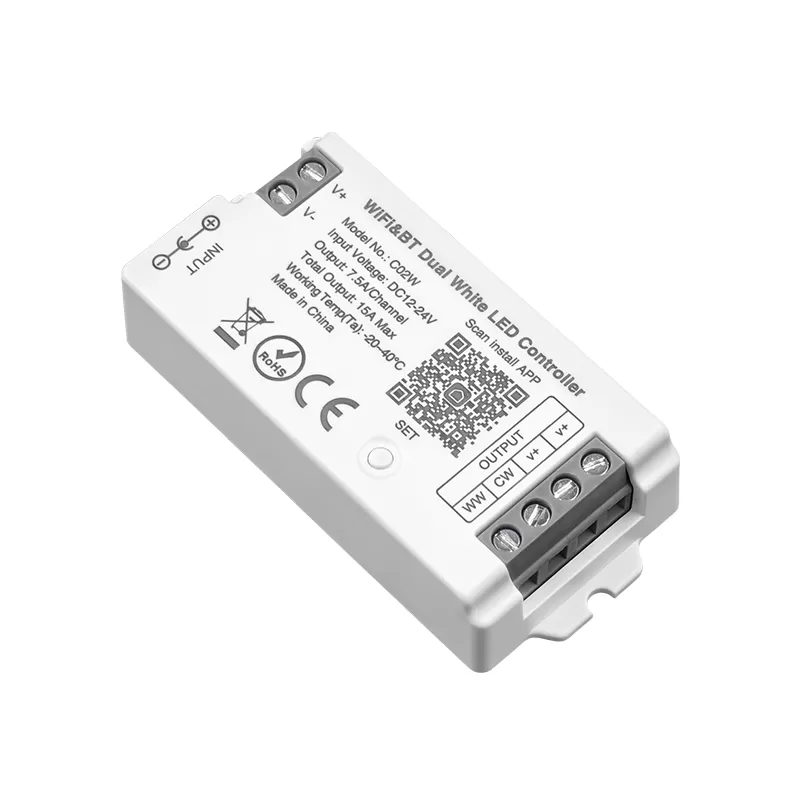
Laimi provides both WiFi LED controllers and Zigbee LED controllers to meet different smart lighting requirements.
A WiFi LED controller connects LED strips to a home or commercial WiFi network, allowing users to manage lighting through smartphone applications or smart home platforms.
The typical connection process includes:
Power Supply → WiFi LED Controller → LED Strip → Mobile APP
Users can control lighting functions such as:
Turning lights on and off remotely
Adjusting brightness levels
Changing RGB colors
Setting schedules
Creating lighting scenes
Integrating voice assistants
WiFi controllers are popular because they can connect directly to existing wireless networks without requiring additional hardware.
Users can control LED lighting from anywhere with an internet connection, making them suitable for:
Smart homes
Apartments
Offices
Retail displays
WiFi controllers can integrate with smart ecosystems, allowing users to automate lighting based on time, activity, or personal preferences.
For homeowners looking for a convenient smart lighting upgrade, WiFi technology provides an accessible solution with excellent usability.
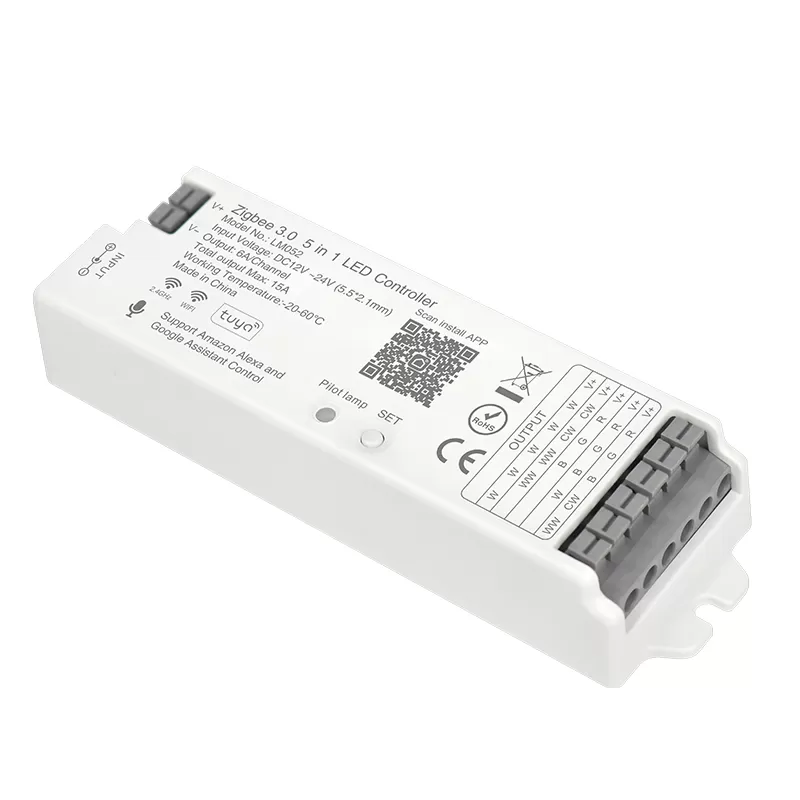
A Zigbee LED controller is designed for users who need reliable communication, low power consumption, and scalable smart lighting networks.
Unlike traditional wireless connections, Zigbee uses mesh networking technology. Each connected device can communicate with others, helping extend network coverage and improve system reliability.
Zigbee is designed for environments with many connected devices, making it suitable for:
Smart homes
Hotels
Office buildings
Commercial lighting projects
Large lighting systems often require multiple controllers and devices. Zigbee networks can support many connected devices while maintaining efficient communication.
Zigbee technology is optimized for low-energy operation, making it suitable for long-term smart lighting applications.
With a Zigbee gateway, users can create intelligent lighting scenarios, including:
Motion-based lighting
Scheduled lighting changes
Room-based automation
Multi-device coordination
For projects requiring reliable smart lighting management, Zigbee offers excellent flexibility and expansion potential.
The best choice depends on your application requirements.
Simple installation
Direct smartphone control
No additional gateway
Remote access through the internet
Small to medium lighting projects
Typical applications include:
Bedrooms
Living rooms
Home decoration
Small offices
Personal smart lighting projects
Multiple connected lighting devices
Strong network stability
Smart automation
Large-area coverage
Professional lighting management
Typical applications include:
Smart villas
Hotels
Commercial buildings
Office lighting systems
Large-scale LED installations
A professional lighting supplier can help select the right control technology based on project requirements. Laimi offers customized smart lighting solutions and supports different control protocols to match various application scenarios.
Proper installation ensures stable performance and longer service life for both WiFi and Zigbee lighting systems.
Before installation, confirm:
LED strip voltage (5V, 12V, or 24V)
LED strip type (single color, RGB, RGBW, CCT)
Controller output compatibility
The power supply should match the total power consumption of the LED strip system. An insufficient power supply may cause:
Flickering
Reduced brightness
Controller instability
For WiFi controllers:
Install within reliable router coverage
Avoid excessive wireless interference
For Zigbee controllers:
Place gateway devices properly
Build a strong mesh network
Keep connected devices within suitable communication distance
For technical guidance, customized solutions, or product selection assistance, customers can visit Laimi or contact the team through Contact Us.
Both WiFi LED controllers and Zigbee LED controllers provide powerful solutions for modern smart lighting systems, but they serve different needs.
WiFi controllers are ideal for users who want convenient app control, easy installation, and affordable smart lighting upgrades. Zigbee controllers are better suited for larger projects requiring reliable communication, automation, and future expansion.
With a complete range of smart LED control products, Laimi helps customers choose the right lighting technology for residential, commercial, and customized applications. Through continuous innovation, independent product development, and professional technical support, Laimi delivers reliable smart lighting solutions worldwide.

E-mail:
Phone:
Add:
