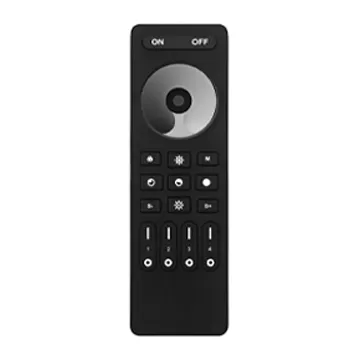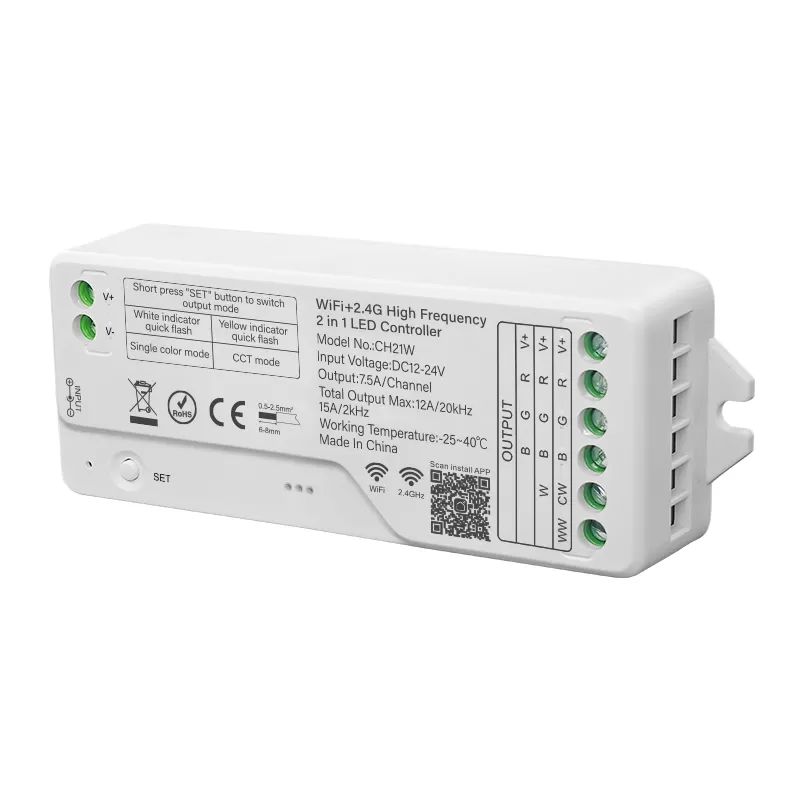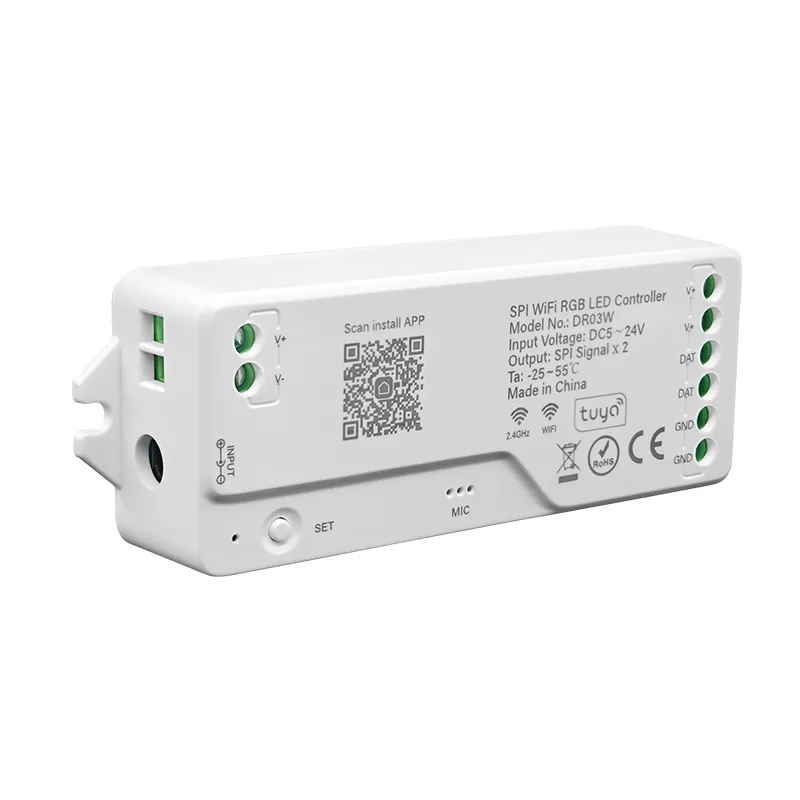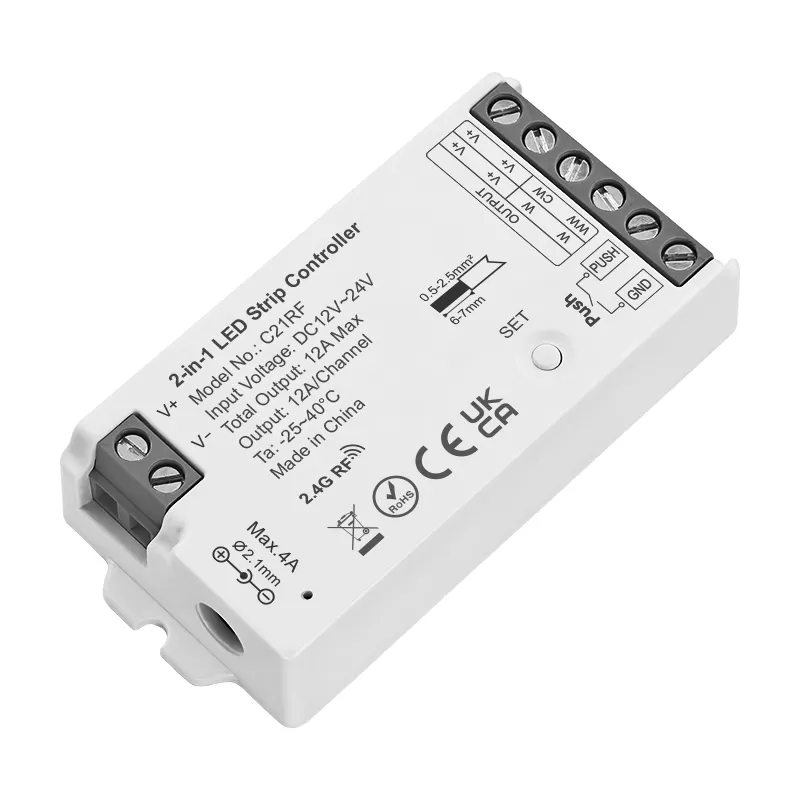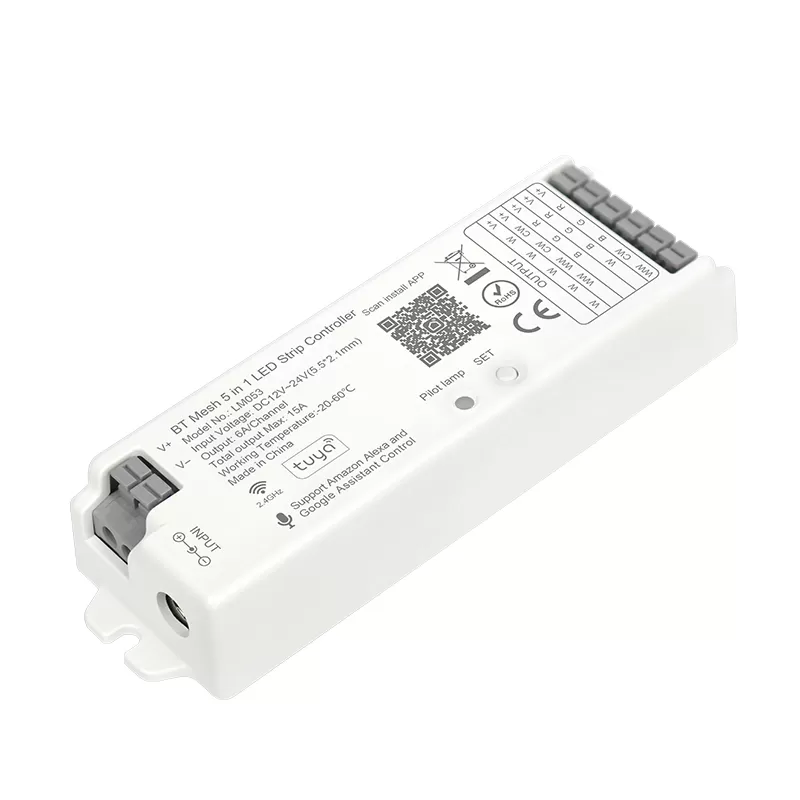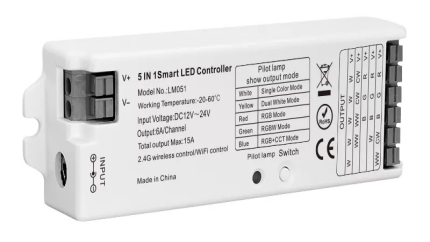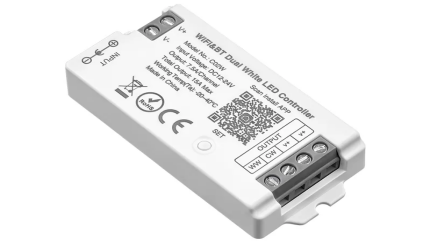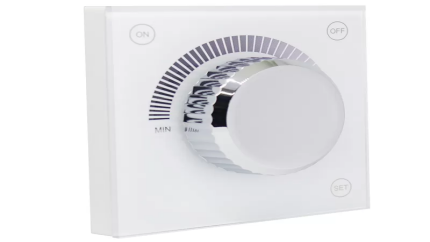
LAIMI WiFi LED controllers provide convenient app, voice, and remote access for dimming, color adjustment, timers, scene settings, music synchronization, device sharing, and group control. Designed as a reliable LED strip WiFi controller, each model delivers stable wireless LED control for residential, commercial, and smart lighting projects.
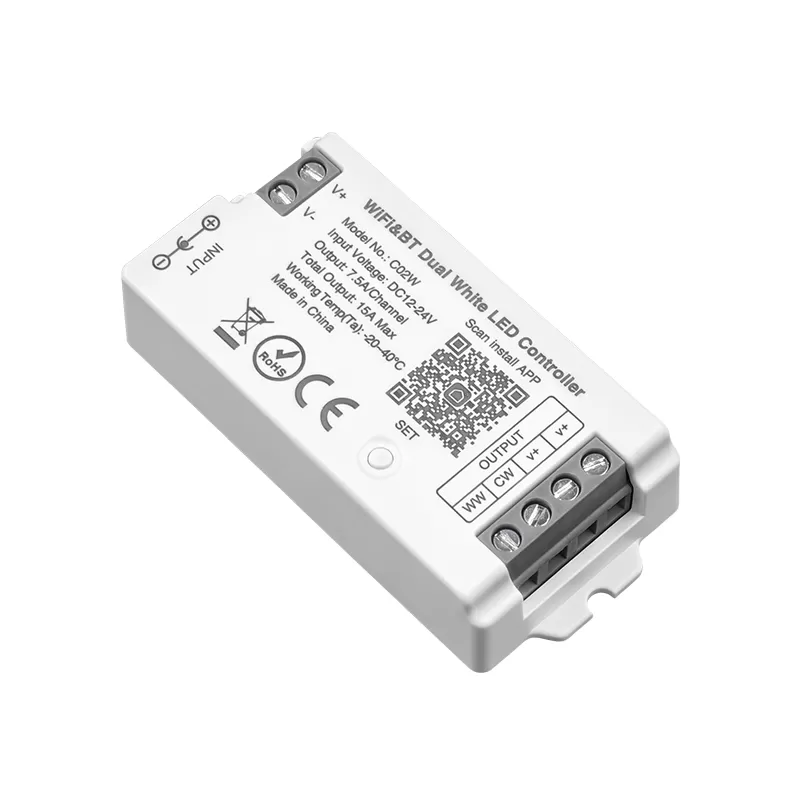
WiFi Single Color LED Controller
View More
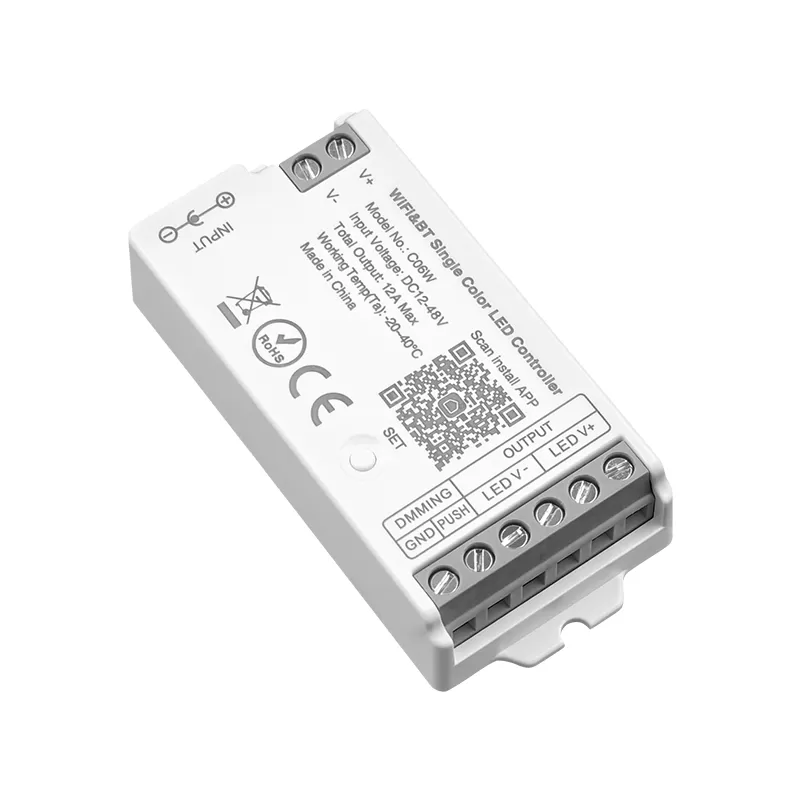
48V WiFi Single Color LED Controller
View More
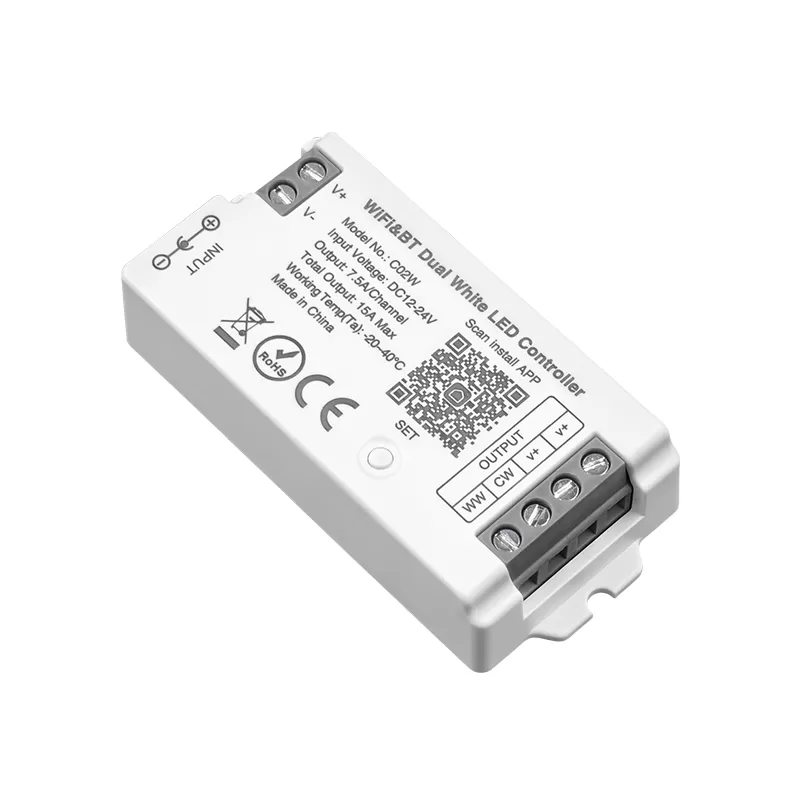
WiFi CCT LED Controller
View More
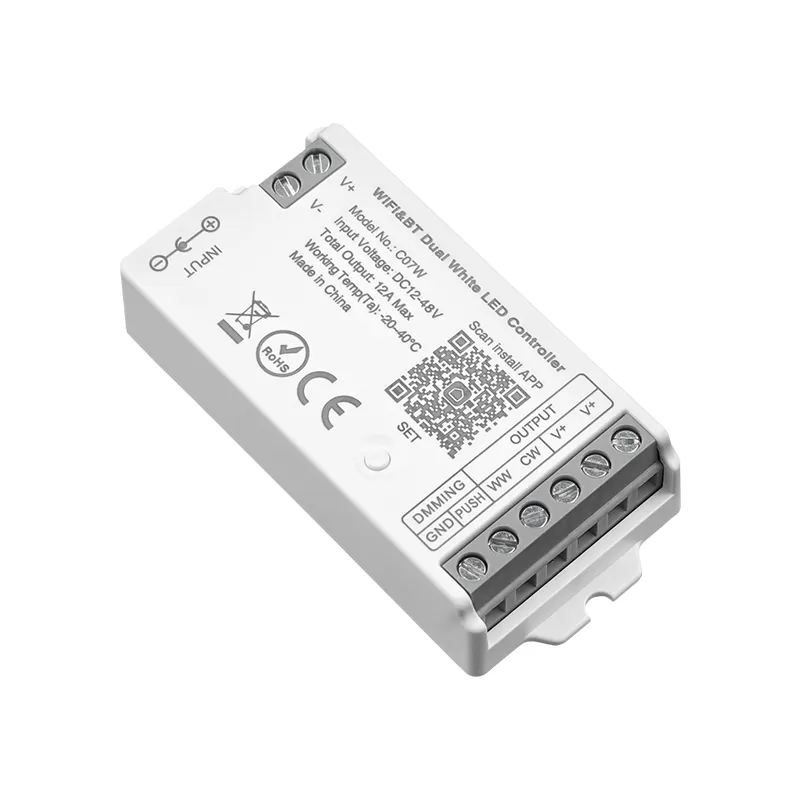
48V WiFi CCT LED Controller
View More
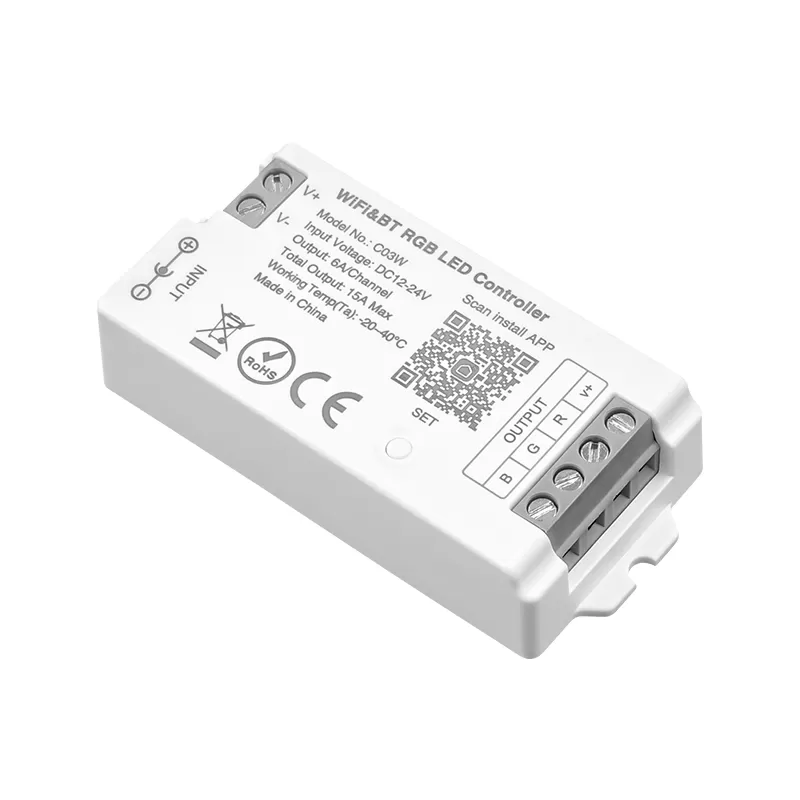
WiFi RGB LED Controller
View More

WiFi RGBW LED Controller
View More
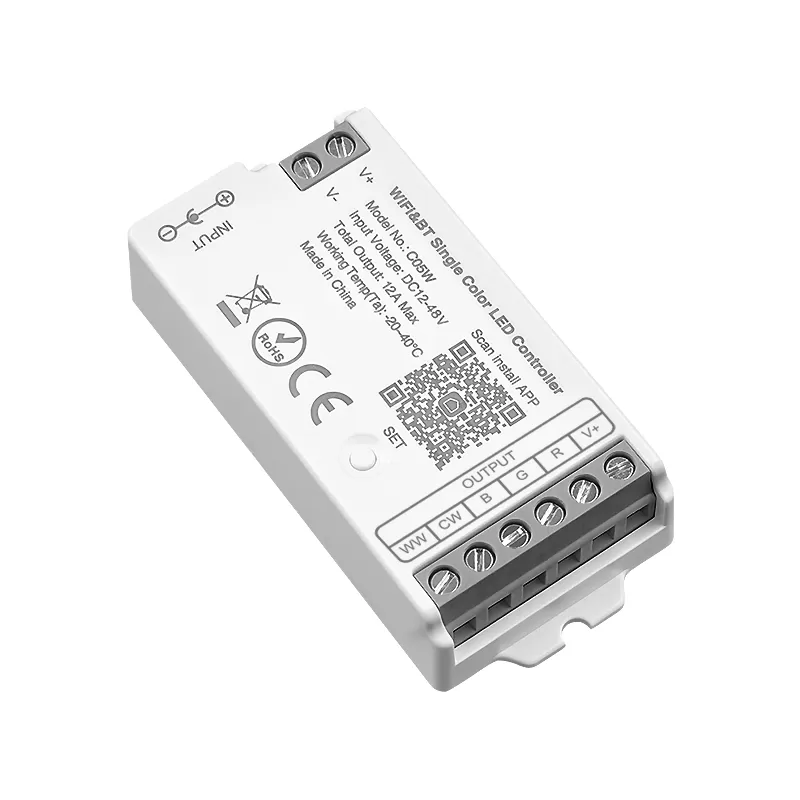
WiFi RGBCCT LED Controller
View More
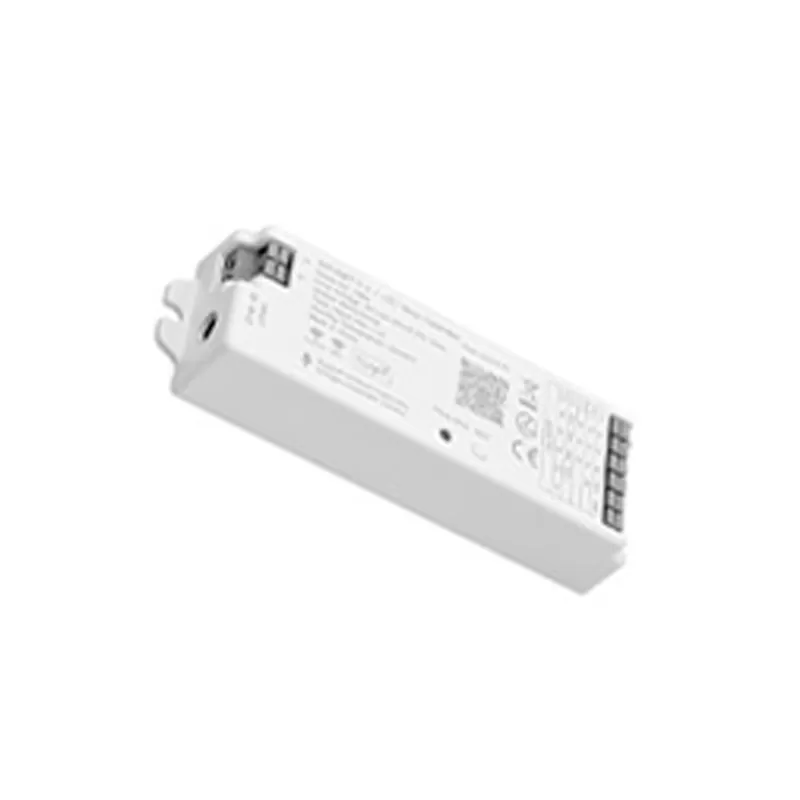
WiFi 5-in-1 LED Controller
View More
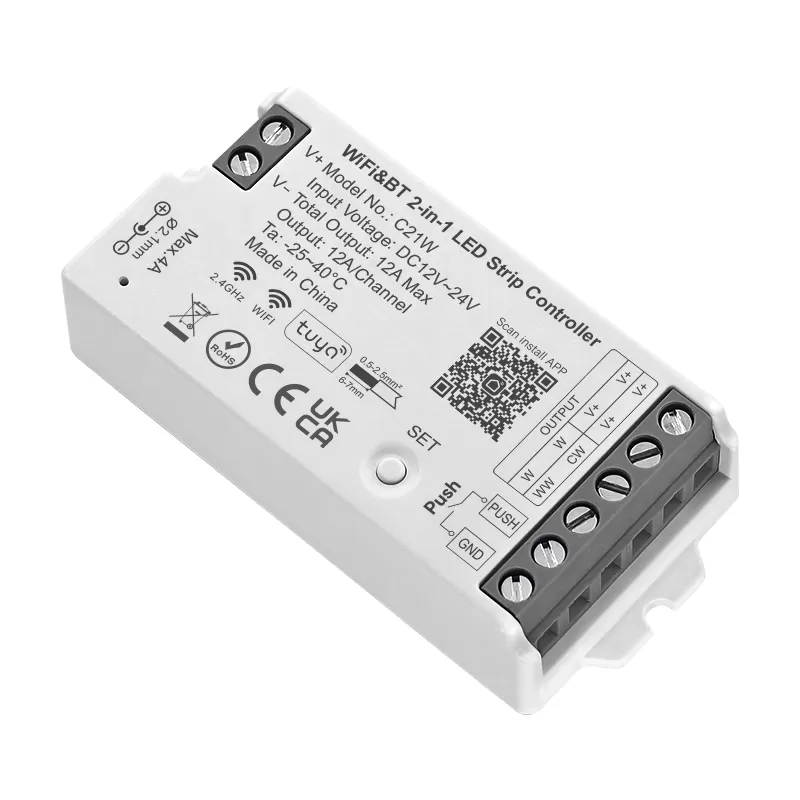
WiFi&BT 2-in-1 LED Strip Controller
View More
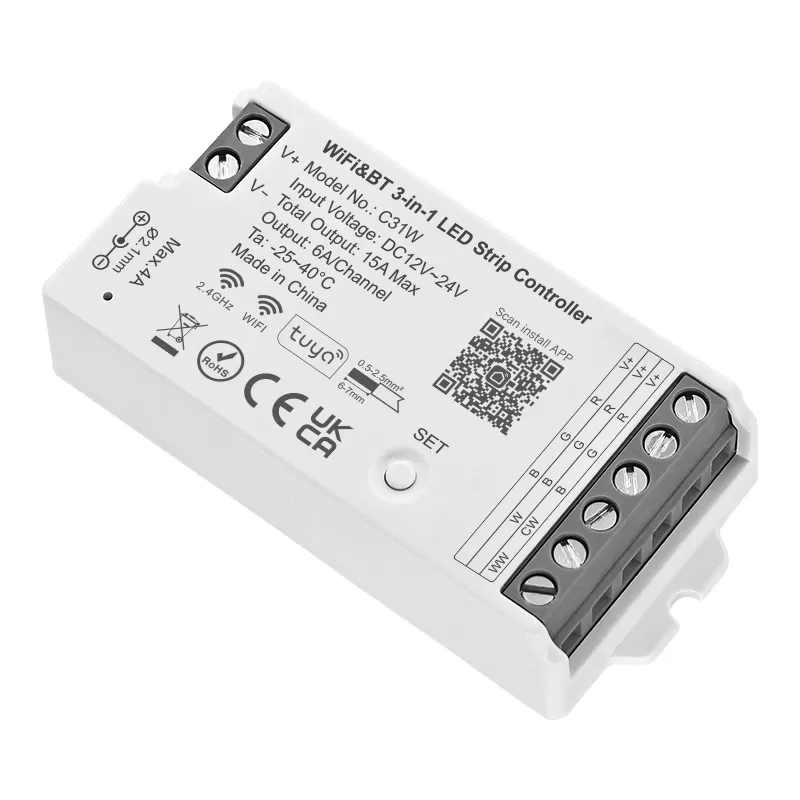
WiFi&BT 3-in-1 LED Strip Controller
View More
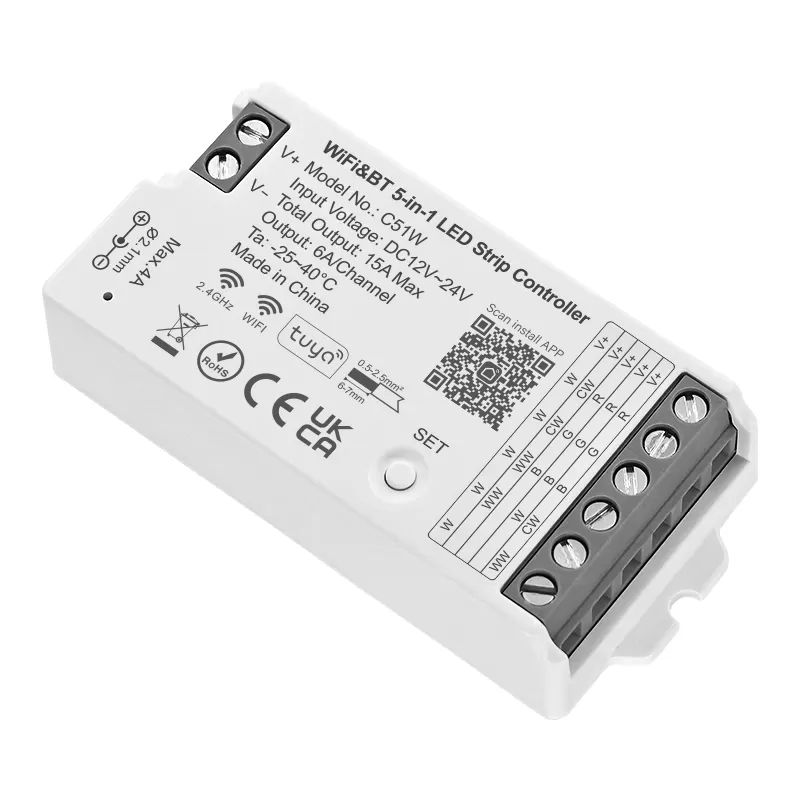
WiFi&BT 5-in-1 LED Strip Controller
View More
Choosing the right LED strip WiFi controller starts with matching the controller to the LED strip type, operating voltage, output channels, total power, and required smart functions. A correctly selected controller helps ensure stable dimming, accurate color adjustment, reliable app connectivity, and long-term system performance.
Before selecting a model, confirm whether your LED strip is single-color, CCT, RGB, RGBW, or RGBCCT. You should also calculate the total wattage of the connected LED strips and leave a suitable safety margin below the controller’s rated output.
| Selection Factor | What to Check |
| LED Strip Type | Single-color, CCT, RGB, RGBW, or RGBCCT |
| Output Channels | 1CH, 2CH, 3CH, 4CH, or 5CH |
| Input Voltage | Match the controller, LED strip, and power supply voltage |
| Total Load | Keep the total LED load below the controller’s rated output |
| Wi-Fi Network | Confirm compatibility with a 2.4 GHz Wi-Fi network |
| Smart Functions | App control, voice control, scenes, timers, music mode, and device sharing |
| Installation Space | Check controller dimensions, ventilation, wiring space, and operating environment |
| Additional Control | Confirm whether RF remote or push-button control is required |
For smart-home and multi-zone projects, select a WiFi smart LED controller that supports the required app platform, voice assistant, group-control functions, and remote-access method.
LAIMI provides OEM and ODM support for lighting brands, distributors, wholesalers, contractors, and smart-lighting solution providers. We can adapt existing controller platforms or evaluate customized requirements according to the LED strip type, communication method, output capacity, application environment, and target market.
| Customization Option | Available Support |
| Output Configuration | Single-color, CCT, RGB, RGBW, RGBCCT, and 5-in-1 controller options |
| Communication Method | Wi-Fi, Bluetooth, RF, or combined-control solutions |
| Smart Functions | App control, voice control, scenes, timers, music mode, grouping, and device sharing |
| Product Appearance | Housing color, label, model number, and appearance details |
| Branding | Private logo, rating label, manuals, and customized packaging |
| Remote Control | Compatible handheld remote or wall-panel configuration |
| Firmware Functions | Evaluation of customized control logic and app-related functions |
| Technical Documents | Datasheets, manuals, wiring diagrams, and packaging information |
| Sample Testing | Sample preparation, function verification, and approval before volume production |
Requirement Review → Model Recommendation → Sample Development → Function Testing → Sample Approval → Mass Production
Whether you require a standard wireless LED controller or a customized smart wireless LED controller, LAIMI can provide product-selection support, sample validation, production management, and technical documentation.

Please send us your required voltage, output channels, communication method, smart functions, certification requirements, order quantity, branding details, and target market.
LAIMI WiFi LED controllers combine mobile-app control with smart-home functions such as scenes, schedules, device sharing, group management, and voice operation. They are suitable for residential lighting, commercial spaces, retail displays, entertainment venues, and other connected lighting projects.
| Control Option | Available Functions |
| Mobile App | On/off, dimming, color adjustment, color temperature, scenes, timers, and music mode |
| Voice Assistant | Compatible control through Amazon Alexa or Google Assistant on selected models |
| RF Remote | Fast local control without opening the app on compatible controller models |
| Group Control | Manage several controllers by room, lighting zone, or project area |
| Device Sharing | Share controller access with family members, installers, or project operators |
| Automation | Create schedules, countdowns, scenes, and smart-home routines |
| Remote Access | Manage compatible controllers through the internet when the system is online |
| Push-Button Control | Local switching or dimming on selected models |
A WiFi wireless LED smart controller provides convenient control through smartphones and compatible voice platforms, while selected models also retain RF or push-button operation for faster local control.
For projects with several rooms or lighting zones, the app can organize multiple devices into clearly named groups, making wireless LED control easier to manage.
LAIMI provides WiFi LED controllers for different constant-voltage LED strip configurations. Buyers can select a dedicated controller for a specific strip type or choose a flexible 5-in-1 model for projects involving multiple output modes.
| Controller Type | Compatible LED Strip | Channels | Main Functions | Recommended Applications |
| WiFi Single-Color Controller | Single-color LED strip | 1CH | Dimming, timer, scene, and group control | Cabinet, cove, and ambient lighting |
| WiFi CCT Controller | Tunable-white LED strip | 2CH | Brightness and color-temperature adjustment | Residential and commercial lighting |
| WiFi RGB Controller | RGB LED strip | 3CH | Color selection, brightness, scenes, and music mode | Decorative and entertainment lighting |
| WiFi RGBW Controller | RGBW LED strip | 4CH | RGB effects with independent white control | Hotels, restaurants, and display lighting |
| WiFi RGBCCT Controller | RGB+CCT LED strip | 5CH | Full-color, tunable-white, scene, and voice control | Advanced smart-lighting systems |
| WiFi 5-in-1 Controller | Single-color, CCT, RGB, RGBW, and RGBCCT strips | Up to 5CH | Switchable output modes and flexible configuration | Distributors, installers, and multi-purpose projects |
A dedicated LED light WiFi controller is suitable when the LED strip type is already fixed. A 5-in-1 smart WiFi LED controller is more suitable for buyers who need one controller platform to support several lighting configurations.


LAIMI WiFi LED controllers connect to 2.4 GHz Wi-Fi networks using the 802.11 b/g/n standard. Most models do not connect directly to a 5 GHz-only network, so make sure your router has the 2.4 GHz band enabled before pairing the controller.
First, connect your smartphone to a 2.4 GHz Wi-Fi network. Press and hold the SET button, or switch the controller power on and off four times, until the connected LED strip begins flashing. Open the designated app, such as Smart Life or Tuya Smart depending on the model, and wait for the LED light WiFi controller to be detected. When automatic discovery is unavailable, select “Add Device” and follow the on-screen pairing instructions.
Yes. Selected models can integrate with compatible smart-home platforms and voice assistants, including Amazon Alexa and Google Assistant. This allows users to operate the smart WiFi LED controller through app commands, voice control, scenes, schedules, and automation routines.
Multiple controllers can usually be added to the same app account and organized by room, group, or lighting zone. The practical number depends on the Wi-Fi router capacity, network stability, app platform, and number of connected smart devices.
For larger commercial or multi-zone projects, use a stable router and divide the wireless LED control system into clearly named groups. Contact LAIMI with your project layout and required number of controllers for configuration advice.
Internet access is normally required for remote app operation, voice-assistant control, cloud-based scenes, device sharing, and control from outside the local network.
First, confirm whether the LED strip is single-color, CCT, RGB, RGBW, or RGBCCT. Then check the operating voltage, output channels, wattage per meter, total strip length, and required smart functions.
The controller’s rated output should be higher than the total LED load, with a suitable safety margin for continuous operation. You should also confirm 2.4 GHz Wi-Fi compatibility and whether app, voice, RF remote, or group control is required.
Yes. Multiple compatible controllers can usually be added to one app account and organized by room, group, or lighting zone. Users can operate devices individually or create groups for synchronized switching, dimming, color adjustment, and scene control. The practical number of connected devices depends on the router capacity, Wi-Fi coverage, network stability, and app platform.
First, confirm that the 2.4 GHz Wi-Fi network is available and that the controller is within a stable signal range. Restart the controller, router, and mobile app, then check whether the Wi-Fi password or router settings have changed.
When the controller remains offline, reset it into pairing mode and add it to the app again. For larger wireless LED control systems, check the router’s connected-device capacity and avoid installing controllers behind thick metal structures or in areas with weak signals.
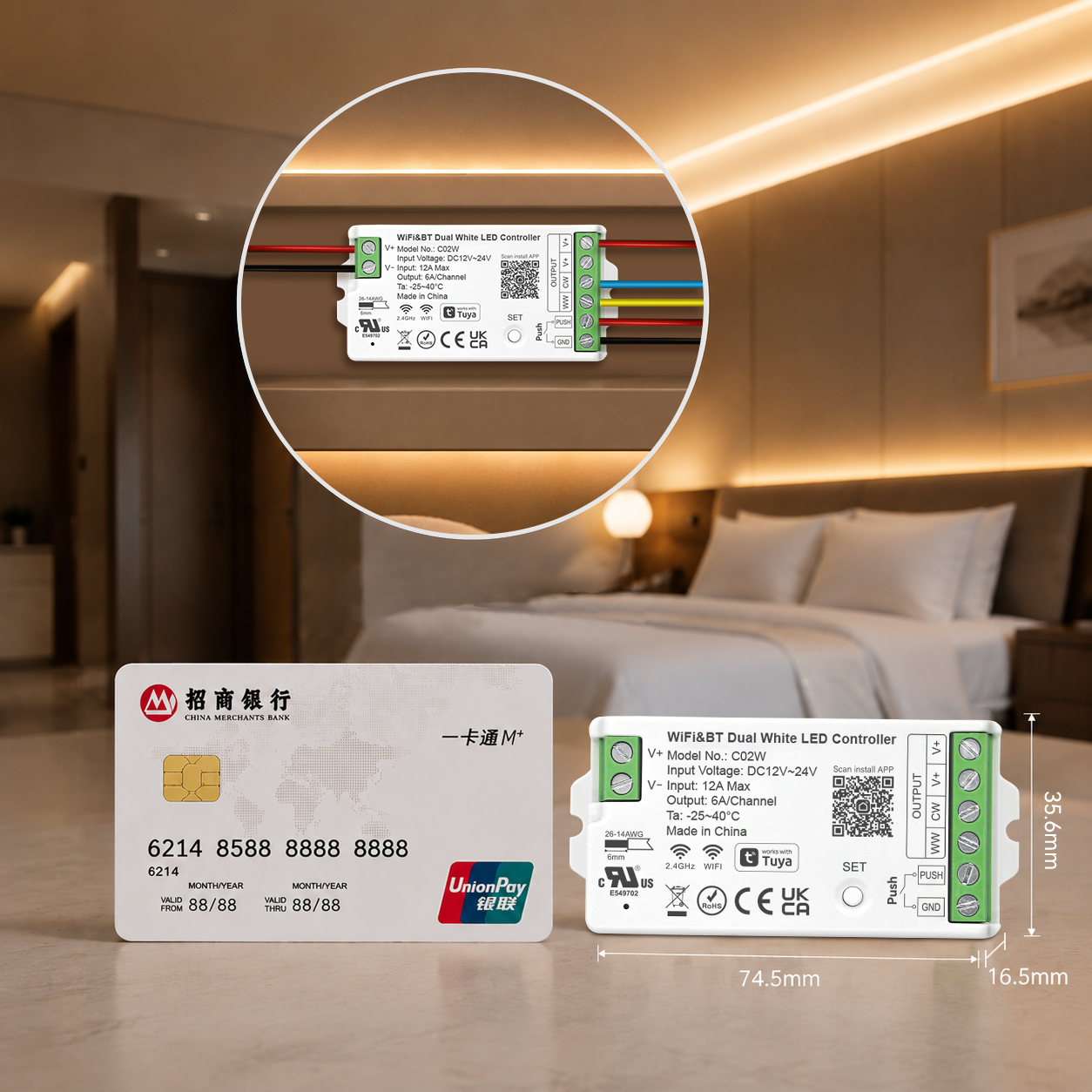
LAIMI’s smart wireless LED controller features a compact housing that fits easily behind LED strips, inside lamp bases, cabinets, and other limited installation spaces. Made from fire-retardant ABS material and supported by an appearance patent, it combines reliable protection with a clean, modern design.
Its lightweight structure and simple wiring make installation faster, while the discreet housing allows the wireless LED controller to blend naturally into residential, commercial, and entertainment lighting systems without affecting the overall appearance.
E-mail:
Phone:
Add:
E-mail:
Phone:
Add:
 EN
EN