 EN
EN

An LED controller RF remote provides a simple and reliable way to control LED strip lighting without the limitations of infrared technology. With longer transmission distance, flexible installation options, and multi-zone control capability, RF controllers are widely used in homes, commercial spaces, hotels, and customized lighting projects.
When choosing an RF LED remote, users should consider several key factors, including wireless range, number of control zones, pairing methods, LED strip compatibility, and application requirements. The right RF control solution ensures smooth dimming, stable signal transmission, and a better lighting experience.
Laimi provides professional LED control solutions, including RF, WiFi, Zigbee, Bluetooth mesh controllers, TRIAC dimmers, SPI controllers, gateways, smart switches, and intelligent lighting products. With independent R&D capabilities and customized service options, Laimi helps global customers create efficient and intelligent LED lighting systems.
An LED controller RF remote is a wireless control system that uses radio frequency (RF) signals to communicate between the handheld remote and the LED controller. Unlike infrared remotes, RF technology does not require direct line-of-sight, allowing users to control LED strips through walls, furniture, or other obstacles.
A typical RF LED control system includes:
RF remote control
LED controller receiver
LED strip light
Power supply
The remote sends wireless commands to the controller, which adjusts the LED strip functions, such as:
Turning lights on or off
Adjusting brightness
Changing colors
Selecting lighting modes
Creating customized scenes
Compared with traditional wired controls, RF technology offers greater flexibility for installation and daily operation.
Laimi’s RF LED remote solutions are designed for stable wireless communication and convenient LED lighting management, supporting various LED strip applications.
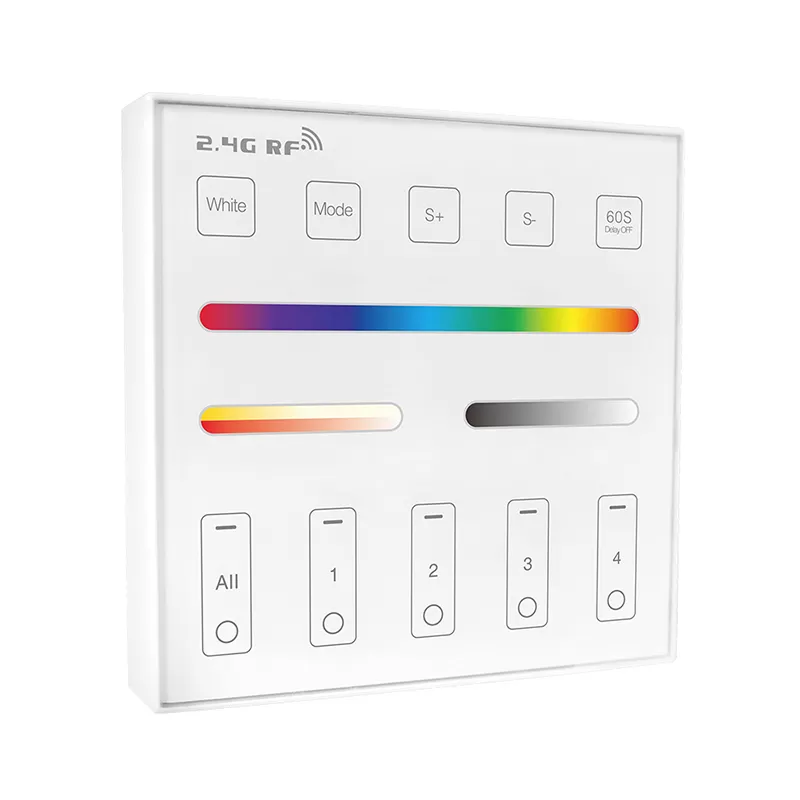
The control range of an RF LED remote depends on factors such as transmission frequency, antenna design, installation environment, and interference conditions.
Most RF LED controllers provide a practical control distance suitable for:
Bedrooms and living rooms
Offices and meeting rooms
Retail displays
Hotels and restaurants
Decorative lighting projects
Compared with infrared controllers, RF systems offer several advantages:
Infrared remotes require the remote to point directly at the receiver. RF technology transmits signals through radio waves, allowing users to control lighting even when the controller is hidden behind cabinets, ceilings, or furniture.
Because the receiver does not need to remain visible, RF controllers are ideal for:
Recessed LED strip installations
Cabinet lighting
Architectural lighting
Furniture lighting
A high-quality RF system provides reliable communication with reduced signal interruption, making it suitable for both residential and commercial applications.
Pairing an LED controller RF remote is usually a simple process. Although pairing methods vary depending on the product model, the general steps include:
Connect the RF controller between the power supply and LED strip according to the wiring requirements.
Turn on the power and press the designated pairing button or remote combination key according to the controller instructions.
Press the pairing button on the RF LED remote until the controller receives the signal.
Check whether the remote can properly control:
Power switching
Brightness adjustment
Color changes
Lighting effects
If pairing fails, common solutions include:
Checking whether the remote battery is installed correctly
Confirming the controller and remote use the same frequency or protocol
Resetting the controller before pairing again
Reducing interference from nearby wireless devices
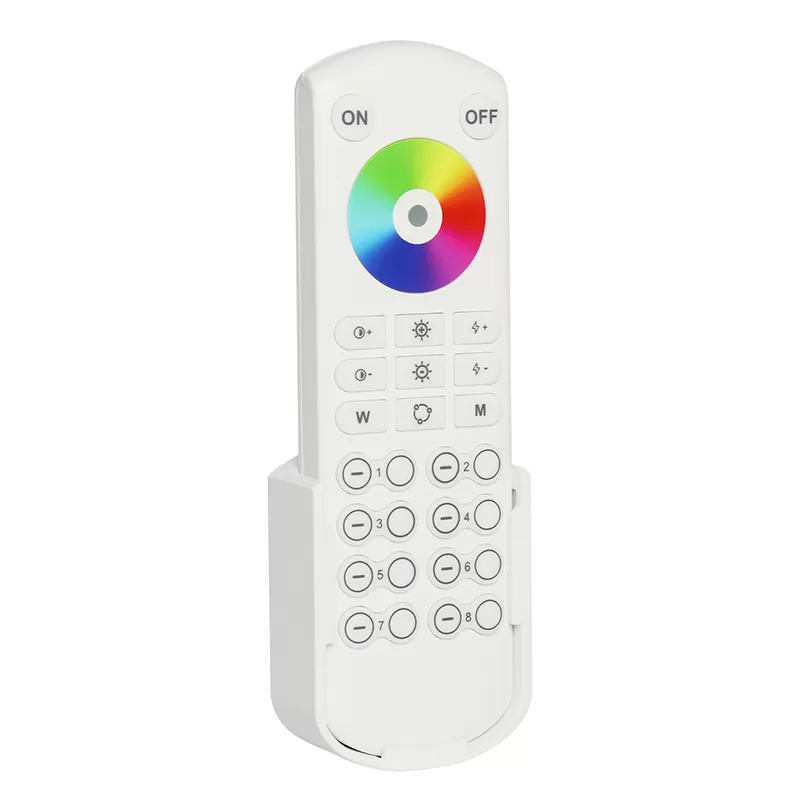
Multi-zone control is one of the most useful features of modern RF LED systems. A zone allows users to control different LED lighting areas independently or together.
For example, in a smart home:
Zone 1: Living room ceiling lighting
Zone 2: Kitchen cabinet lighting
Zone 3: Bedroom decorative lighting
Each zone can have different brightness levels, colors, or lighting scenes.
Users can adjust different areas according to their needs without installing multiple wired switches.
Independent zone control allows users to turn off unnecessary lighting and reduce energy consumption.
Hotels, restaurants, and commercial spaces can create customized lighting environments for different areas.
Laimi develops a wide range of LED control products to support different lighting layouts, from simple single-room applications to complex multi-zone systems.
An LED controller RF remote is widely used because it combines convenience, reliability, and easy installation.
RF controllers are commonly installed in:
Living rooms
Bedrooms
Kitchens
Home theaters
Under-cabinet lighting
Users can easily adjust lighting without searching for physical switches.
Hotels, restaurants, and retail stores use RF LED systems for:
Decorative lighting
Ambient lighting
Display illumination
Customer experience enhancement
RF control systems are also suitable for:
Furniture manufacturers
Interior designers
Smart home integrators
Lighting contractors
For professional LED control solutions and customized requirements, customers can visit Laimi or contact the technical team through Contact Us.
An LED controller RF remote is an efficient solution for users who need reliable wireless control, flexible installation, and convenient LED strip management. With advantages such as long-range operation, no line-of-sight limitation, and multi-zone control capability, RF technology remains one of the most practical choices for modern LED lighting systems.
Whether used for residential decoration, commercial lighting, or customized projects, selecting the right RF LED remote can improve lighting flexibility and overall user experience.
Founded in 2019 and headquartered in Bao'an District, Shenzhen, Laimi specializes in LED strip controllers and smart lighting solutions. The company offers a complete product portfolio covering RF, WiFi, Zigbee, and Bluetooth mesh controllers, along with TRIAC dimmers, SPI controllers, gateways, smart switches, and intelligent light fixtures. With an experienced R&D team, multiple appearance patents, product certifications, and customized development capabilities, Laimi continues to provide innovative lighting solutions for global markets.

E-mail:
Phone:
Add:
